Karpe World: Large-Scale Production Powered by Automated Performer Tracking
Updated: Sep 17
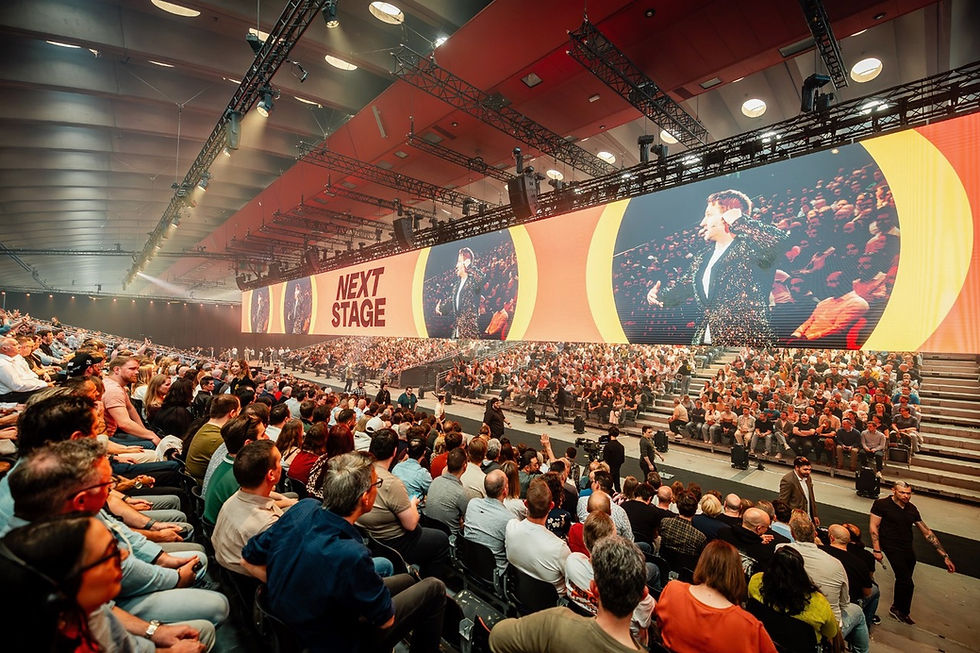
With a 50-metre-wide performance area, an extensive lighting rig and almost 115,000 parameters in use, Karpe World was a production built on scale. Lighting design was delivered by Filament AS, with zactrack PRO integrated into the setup to track the artists and translate their movement into the lighting design.

Norwegian hip-hop duo Karpe brought Karpe World to Ekebergsletta in Oslo for three sold-out shows from 2–4 July 2026. The large-scale production continued the duo’s tradition of turning their live shows into immersive worlds built around music, performance and visual design.
“Karpe World was one of the most fun projects we've done at Filament – and probably one of the most challenging”, says Designer Lars-Morten Larsen at Filament.
The zactrack PRO setup was a joint effort between Norwegian design studio and tracking specialist SuperDiode, led by Charles Wadel-Ellingsen, and German tracking specialist Tracking Pro.
“We had already been in touch with SuperDiode on various technical topics, as they also operate their own zactrack SMART system. So, when they reached out about needing our expertise for this production, we were more than happy to support them with a PRO system and our skilled crew”, explains Martin Kuhn from Tracking Pro.

Automated Performer Tracking from Daylight to Darkness
Staging the production outdoors in Oslo in early July brought an unusual challenge: much of the show took place in daylight, with its final moments transitioning into darkness.
“Early July gives Oslo some of its brightest nights of the year, with only around 5 hours between sunset and sunrise. On our show days, sunset fell only 20–30 minutes before the end of the show, so we had to design the rig to work both in full daylight and total darkness”, explains Lars-Morten.
The roofless stage added another layer of complexity. Most of the lighting rig had to be flown cantilevered from the existing roof structure, while fixtures needed to withstand rain and dust.
“The stage itself had no roof, so most of the rig had to be flown cantilevered off the existing roof structure. Every fixture also had to be IP-rated to withstand heavy rain and dust. Between the cantilever load limits and the IP requirement, we had to choose fixtures carefully to keep output high while staying within the load limitations.”
Martin Kuhn adds: “Given the extremely short setup time and the lack of darkness, physically aligning every fixture (for zactrack) wasn’t an option. For some fixtures, we therefore worked directly from the MVR data instead. We used this approach for the wash lights in the pit in front of the stage, and it worked remarkably well.”
Tracking across a 50-metre stage
With a performance area 15 metres deep and 50 metres wide, maintaining consistent light levels on the two artists as they moved across the stage presented another challenge. zactrack PRO provided their positional data, with 19 Anchors distributed across the stage, side towers and FOH positions.
“The performance area was 15 metres deep and 50 metres wide, and we wanted to avoid large variations in light level on the two artists on stage. To solve this, we used zactrack's PSN data, piped through D3, to keep only two spots live per tracker at any time and also crossfade between fixtures as the artists moved across the stage – we applied the same principle to the moving ramp lights downstage. This turned out to work very well. It kept spill onto other performers to a minimum while giving each artist smooth, consistent coverage.”
In total, the team used the following number and types of fixtures to track the duo:
68 × Ayrton Cobra
48 × Robe ROBIN iFORTE
56 × Martin Viper XIP
68 × Martin MAC Aura XIP

Beyond automating followspots, the tracking data became part of the wider lighting design, translating the artists’ movements into dynamic effects.
“We also used the zactrack data to build live "phasers" in grandMA, driven by relative values from the trackers. This let the rig translate a lot of the artists' energy and movement directly into the light show.”
The result was a tracking workflow integrated into the wider lighting system, allowing the design to respond to the artists in real time across the scale of the Karpe World stage.
Photos 1,2 and 5: © Akam1k3
Photos 3 and 4: © Tracking Pro